Why Mushroom Experts Still Get Poisoned
Even trained mycologists misidentify deadly mushrooms. Why experience and confidence can be your worst enemy when foraging wild fungi.
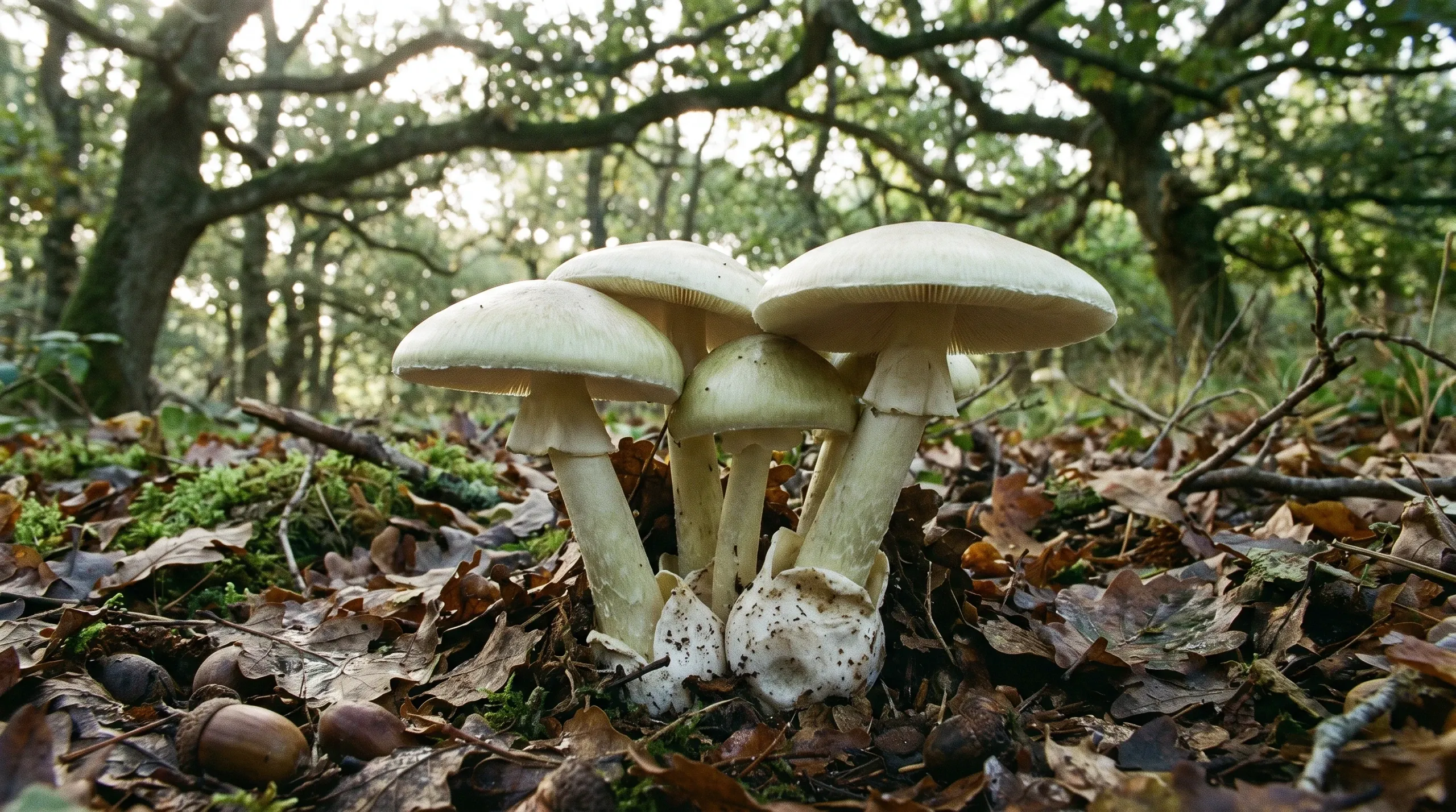
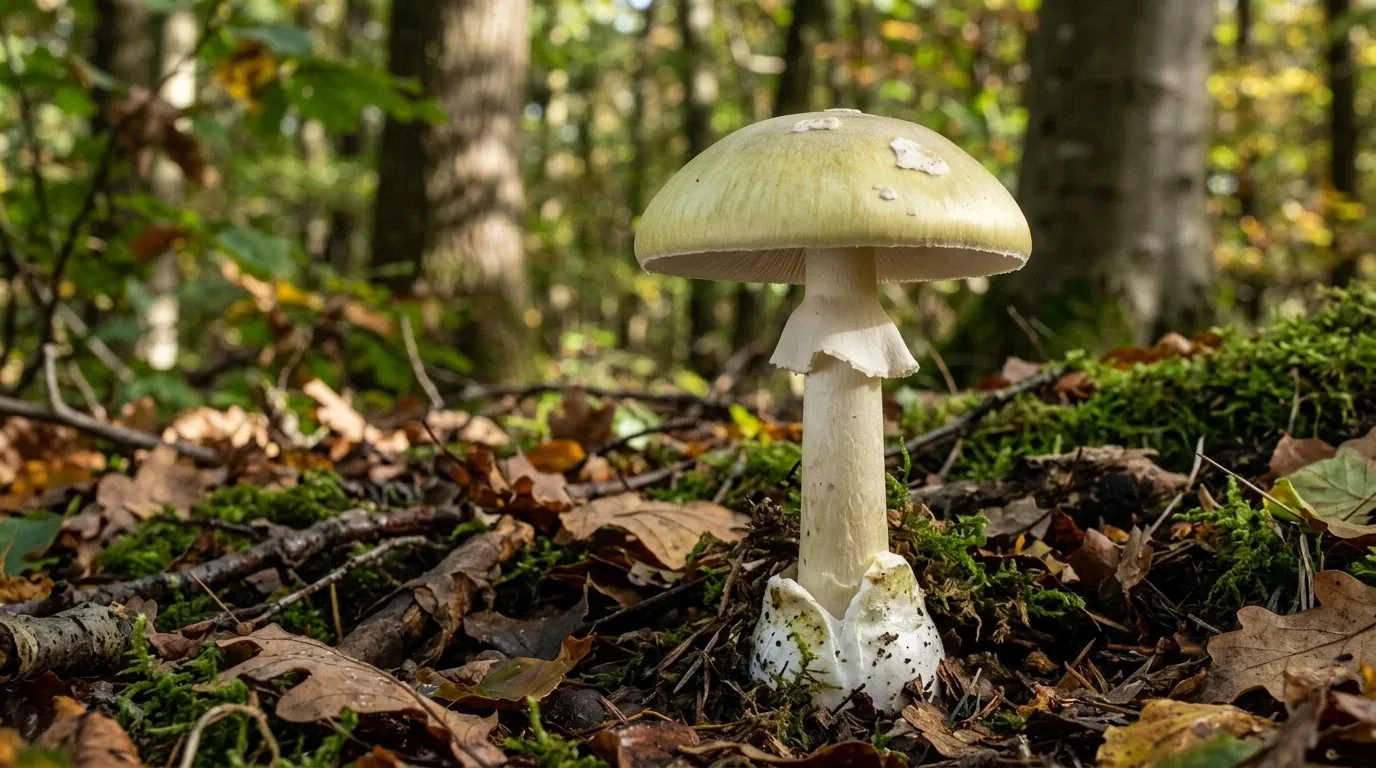
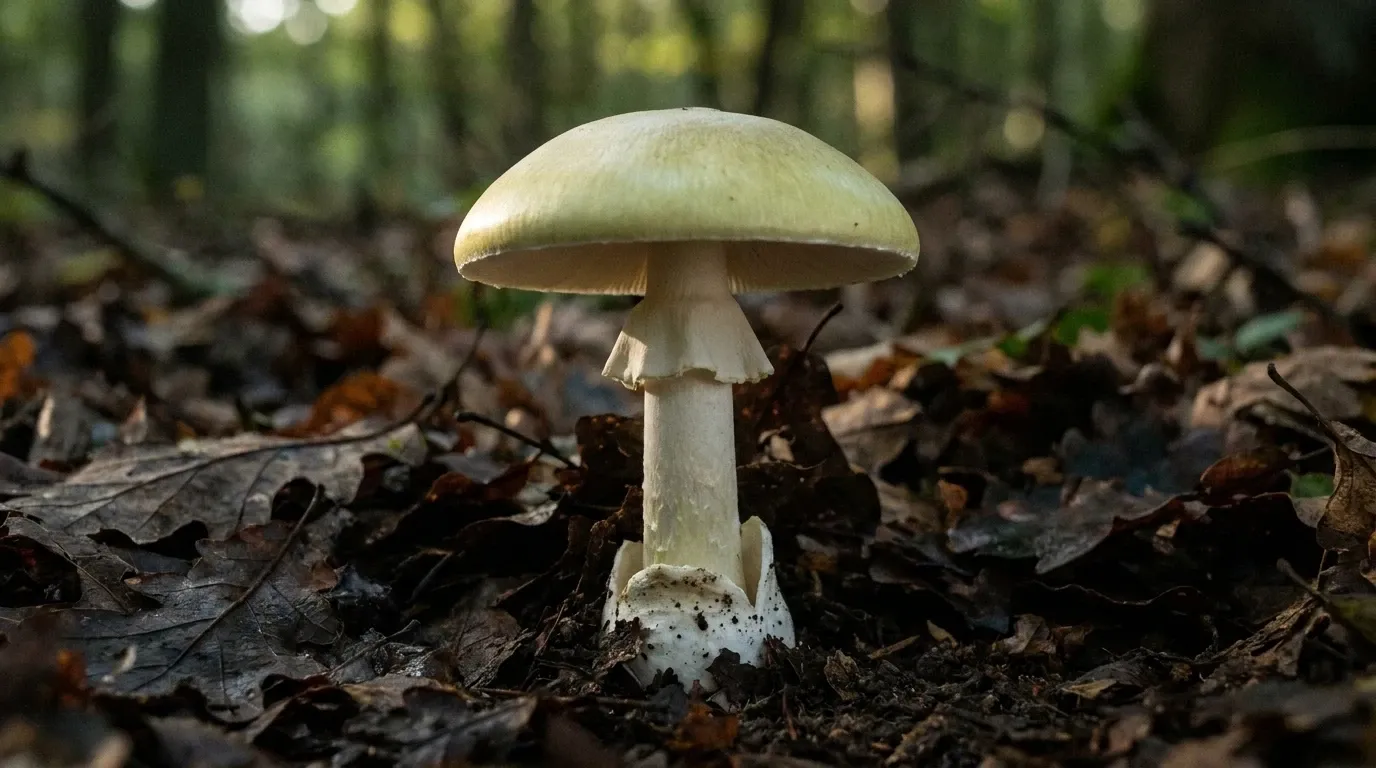
The University of California published a case report in 2017 that should bother anyone who thinks mushroom identification is just a matter of experience. A trained mycologist, someone with formal education in fungal taxonomy, ate what he believed to be edible Agaricus. He woke up two days later in a hospital bed with liver enzymes climbing toward transplant territory. The mushroom was Amanita phalloides, the death cap, and he had looked at it under decent light, checked the field marks, and still called it wrong. He survived, but his confidence did not.
The North American Mycological Association tracks voluntary reports of mushroom poisonings across the continent, and a pattern emerges in the data that no one in the community likes to talk about. Experienced foragers, people who have been identifying mushrooms for decades, show up in the case logs every year. Some walk away with gastrointestinal misery and a story. Others end up on dialysis, or waiting for an organ, or dead from delayed symptoms that arrived too late for intervention. Expertise reduces risk, but it does not eliminate it. The mushroom does not care how many field guides you own.
The Confidence Problem
Poison control centers in the United States log over 7,000 mushroom exposure calls per year, according to data compiled from multiple regional centers. Most of those cases involve children who grabbed a lawn mushroom, or curious adults who ate a small bite and panicked. The fatalities, three to five deaths annually in North America, come almost entirely from a different cohort. People who thought they knew what they were doing. People who had correct identifications behind them, who trusted their own pattern recognition, who believed that experience alone confers immunity from error.
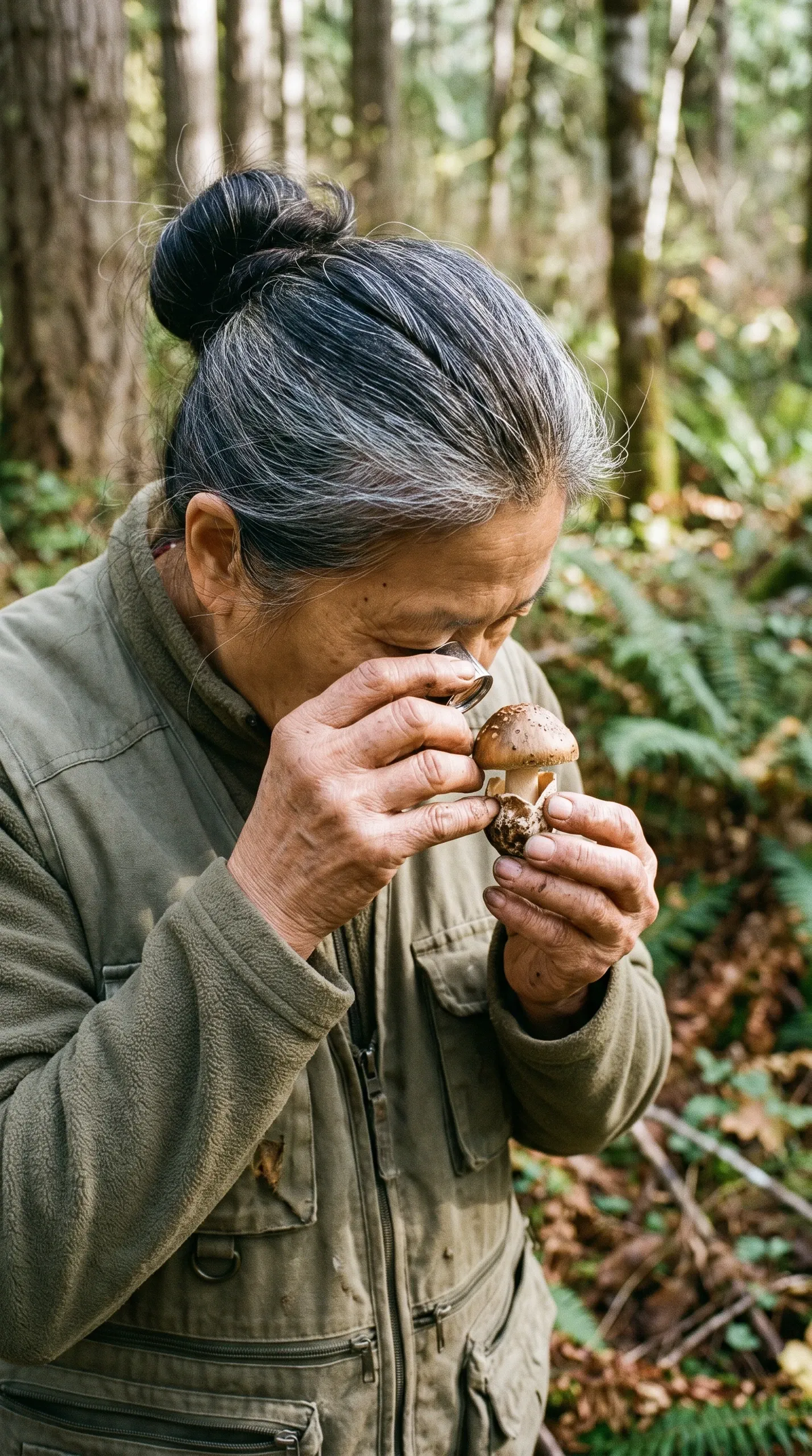
Overconfidence is not irrational in this context. If you have correctly identified a hundred edible species over a decade of foraging, your brain treats the task as solved. The taxonomic decision feels automatic, effortless, the way a fluent reader does not consciously decode words anymore. This is the point at which mistakes become likely, because the conscious verification steps drop away. You stop checking spore prints. You stop confirming every field mark in sequence. You rely on gestalt recognition, the overall impression of the thing, and gestalt recognition fails the instant you encounter an edge case or an atypical specimen.
The adage in mycology goes like this: there are old mushroom hunters, and there are bold mushroom hunters, but there are no old, bold mushroom hunters. The people who survive long enough to become experts are the ones who treat every identification as if it were their first, which is to say they do not trust themselves. The moment you stop double-checking is the moment the odds shift.
Morphological Chaos
Mushrooms do not stay still. A study published in ResearchGate in 2019 documented the fruit body dimensions of six common species across sixteen geographic regions and found variation exceeding 40 percent in cap diameter, stem width, and spore size within the same species. A death cap growing in dry soil under a young oak looks different from a death cap growing in wet soil under a mature oak. The color fades or darkens depending on sun exposure. The veil remnants wash off in rain. The cap cracks in heat. An old specimen bears almost no visual resemblance to a young one, and field guides show you the platonic ideal, the specimen photographed at peak maturity under controlled light. You do not find that mushroom in the woods.
Lookalikes exist not because nature is trying to trick you, but because morphological features are not discrete. There is no clean line between “white gills” and “cream gills.” There is no universal threshold for what counts as a “bulbous base” versus a “slightly swollen base.” A destroying angel, Amanita bisporigera, can be mistaken for a meadow mushroom, Agaricus campestris, if the volva is buried and you do not dig for it. A false morel, Gyromitra esculenta, mimics the true morels closely enough that even experienced foragers have eaten the toxic one, and Gyromitra contains gyromitrin, which metabolizes into monomethylhydrazine, a component of rocket fuel. Eating it is not always fatal, which makes it worse. Sometimes you get away with it, which teaches the wrong lesson.
The difference is in details you have to look for, not details that announce themselves. One gives you an experience. The other shuts down your liver.
The False Assurance of Tools
Smartphone apps that promise mushroom identification via photo upload have become common enough that poison control centers now field calls from people who ate based on an app’s verdict. The technology is not reliable, and the companies behind these apps generally include disclaimers that nobody reads. Machine learning models trained on image datasets perform well on the training set and poorly on the long tail of edge cases that nature actually produces. An AI classifier sees a white mushroom with gills and a ring, and it guesses. It does not check for a volva. It does not smell the specimen. It does not perform a spore print or test for starch reaction. It outputs a probability, and the user interprets that probability as certainty.
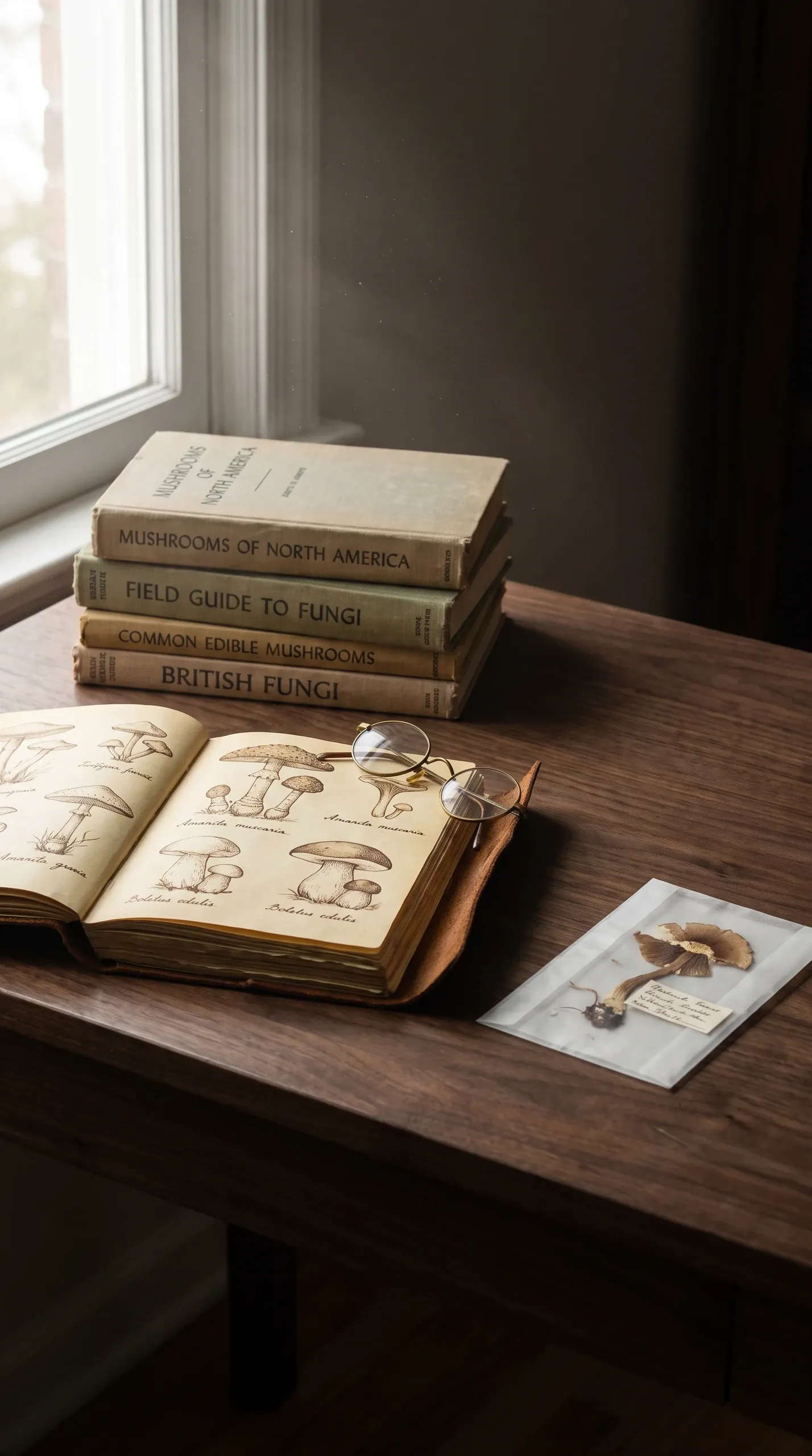
Field guides are better, but they carry their own risks. Most guides are regional, which means a book accurate for the Pacific Northwest will include species that do not grow in the Southeast, and vice versa. Many guides are incomplete, covering the most common species and ignoring the rare ones, which means the toxic mushroom you found might not be in the book at all. Absence of a match does not mean the mushroom is safe. It means the book does not cover it. People eat based on non-identification, the reasoning being that if it is not in the book as poisonous, it must be fine. This logic has put people in intensive care.
Online forums and social media groups where amateurs post photos for crowdsourced identification are worse. Misidentification rates are high, and the format encourages snap judgments from people who want to be helpful but lack the expertise to be accurate. A single overconfident commenter saying “definitely a meadow mushroom, safe to eat” can override five cautious commenters saying “I’m not sure, don’t risk it.” The person who posted the photo wants permission to eat, so they weight the positive ID more heavily than the warnings. Confirmation bias dressed up as community knowledge.
The mushroom does not care how many field guides you own, or how confident you feel, or how many times you got it right before.
What Amatoxins Do
Death caps and their close relatives, the destroying angels, produce a family of cyclic peptides called amatoxins. These molecules are heat-stable, acid-stable, and not broken down by cooking, drying, or freezing. Once ingested, they circulate to the liver, where they inhibit RNA polymerase II, the enzyme responsible for transcribing DNA into messenger RNA. Without mRNA, cells cannot produce the proteins they need to function, and they die. Liver cells die first, because the liver is where the toxin concentrates, but kidney cells follow. The damage is delayed, which is part of what makes amatoxin poisoning so dangerous. You feel fine for six to twelve hours. By the time symptoms appear, the toxin has already begun killing cells, and there is no antidote.
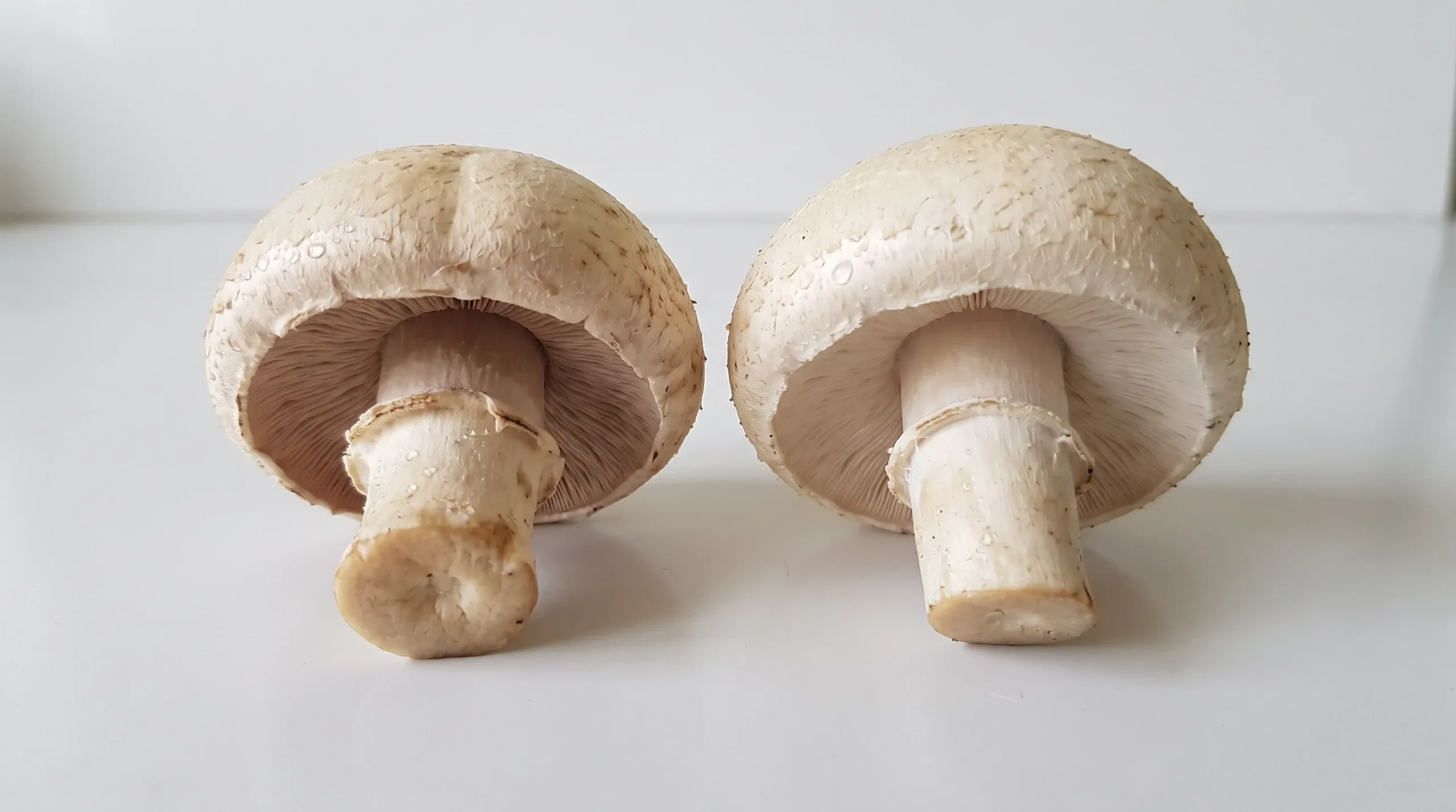
Treatment is supportive. Aggressive hydration, electrolyte management, sometimes dialysis, sometimes a liver transplant if you are lucky enough to get one in time. Mortality rates for untreated amatoxin poisoning run above 50 percent. With early intervention, the rate drops below 10 percent, but “early” means within the first twelve hours, and most people do not seek medical care until the vomiting and diarrhea start, which is usually too late to prevent liver damage. A CDC case series from Northern California documented fourteen poisonings in a single winter, with three patients requiring liver transplants. The cases involved immigrants from Southeast Asia who mistook California death caps for edible Amanita species from their home regions. Expertise in one regional mycology does not transfer cleanly to another.
What Responsible Behavior Actually Looks Like
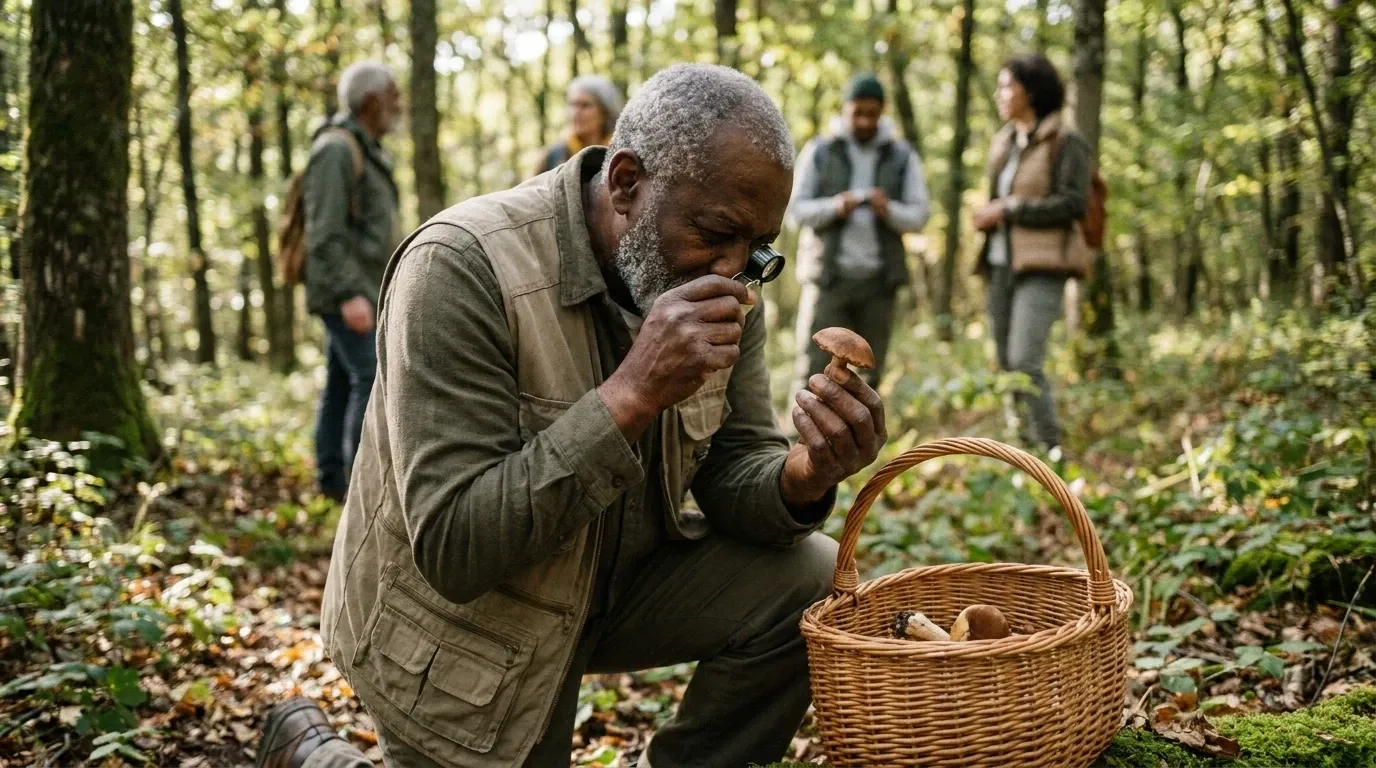
Do not eat a mushroom you identified yourself unless you have years of formal training, access to microscopy, and familiarity with the local species in the specific habitat where the mushroom was found. Even then, verify every identification with a second expert. This is not paranoia. This is the standard protocol among professional mycologists, the people who spend their entire careers studying fungi. They do not trust their own identifications without peer review, and neither should you.
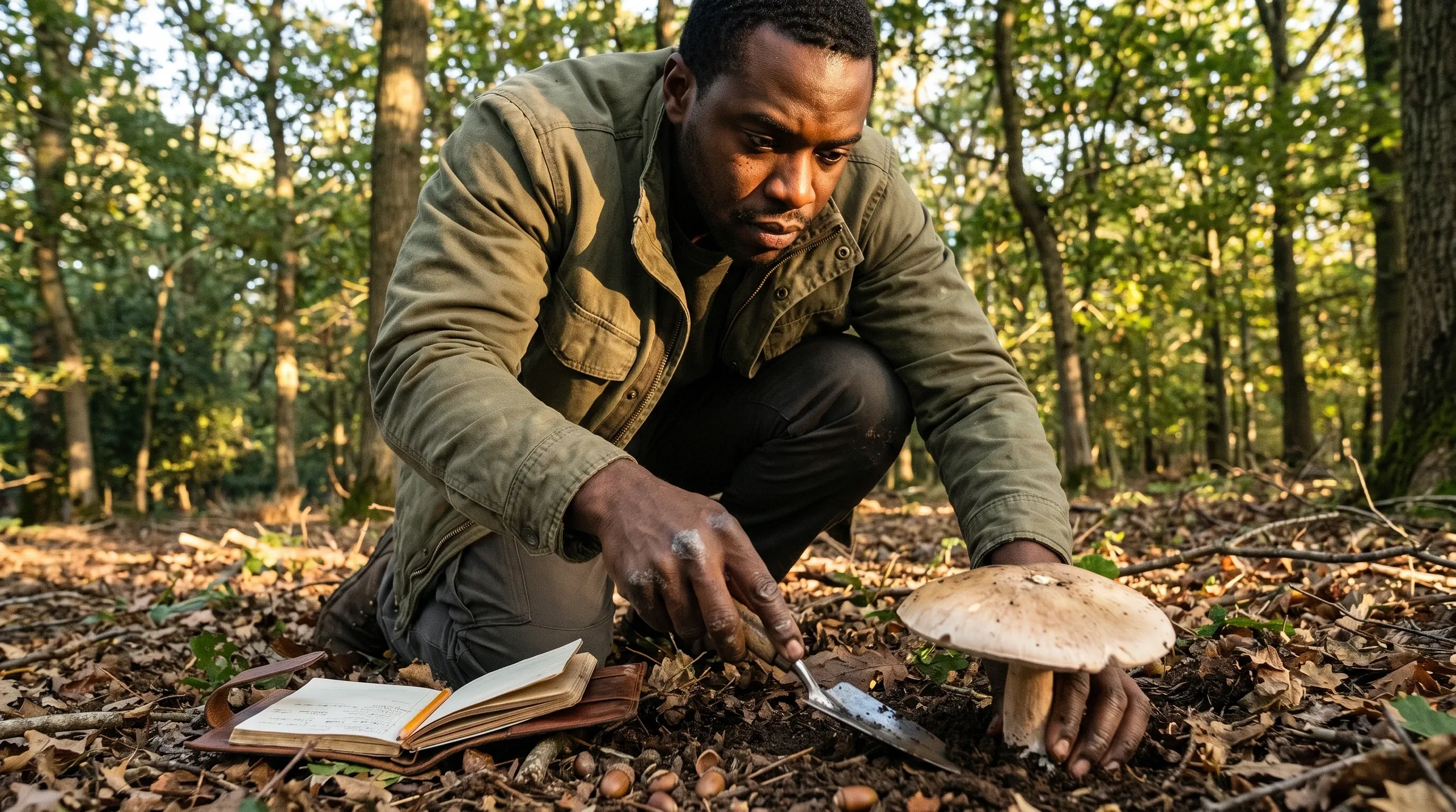
If you find a mushroom you want to eat, photograph it in place before you pick it. Photograph the cap, the gills or pores, the stem, the base of the stem after digging it up to check for a volva, and the surrounding habitat. Take a spore print. Note the smell. Bring the specimen and the photographs to a regional mycological society, a university mycology department, or a poison control center that offers identification services. Do not eat the mushroom until an expert has confirmed the identification in writing. Do not eat it if the expert expresses any doubt. Do not eat it if the expert says it is edible but unfamiliar. Do not eat it if you lose patience waiting for confirmation.
If you do eat a wild mushroom and begin to feel unwell within twenty-four hours, seek medical attention immediately, even if the symptoms seem mild. Bring a sample of the mushroom if you still have one, or at least bring the photographs. Tell the medical staff exactly what you ate, when you ate it, and how much. Tell them if you cooked it, and how. Tell them if anyone else ate the same mushroom. Do not downplay symptoms out of embarrassment. Do not wait to see if it gets better. The difference between a full recovery and permanent organ damage is often a matter of hours.
The Honest Bottom Line
Mushroom identification is not a solvable problem. It is a managed risk, and even people who manage it well sometimes get it wrong. The fatality rate from wild mushroom poisoning is low in absolute terms because most people do not eat wild mushrooms, not because the mushrooms are safe. The people who do eat them, the experienced foragers who have been doing this for years, are the ones who show up in the case reports when something goes wrong. Experience teaches you what to look for, but it also teaches you to trust patterns, and the patterns break down the instant you encounter a specimen that does not fit.
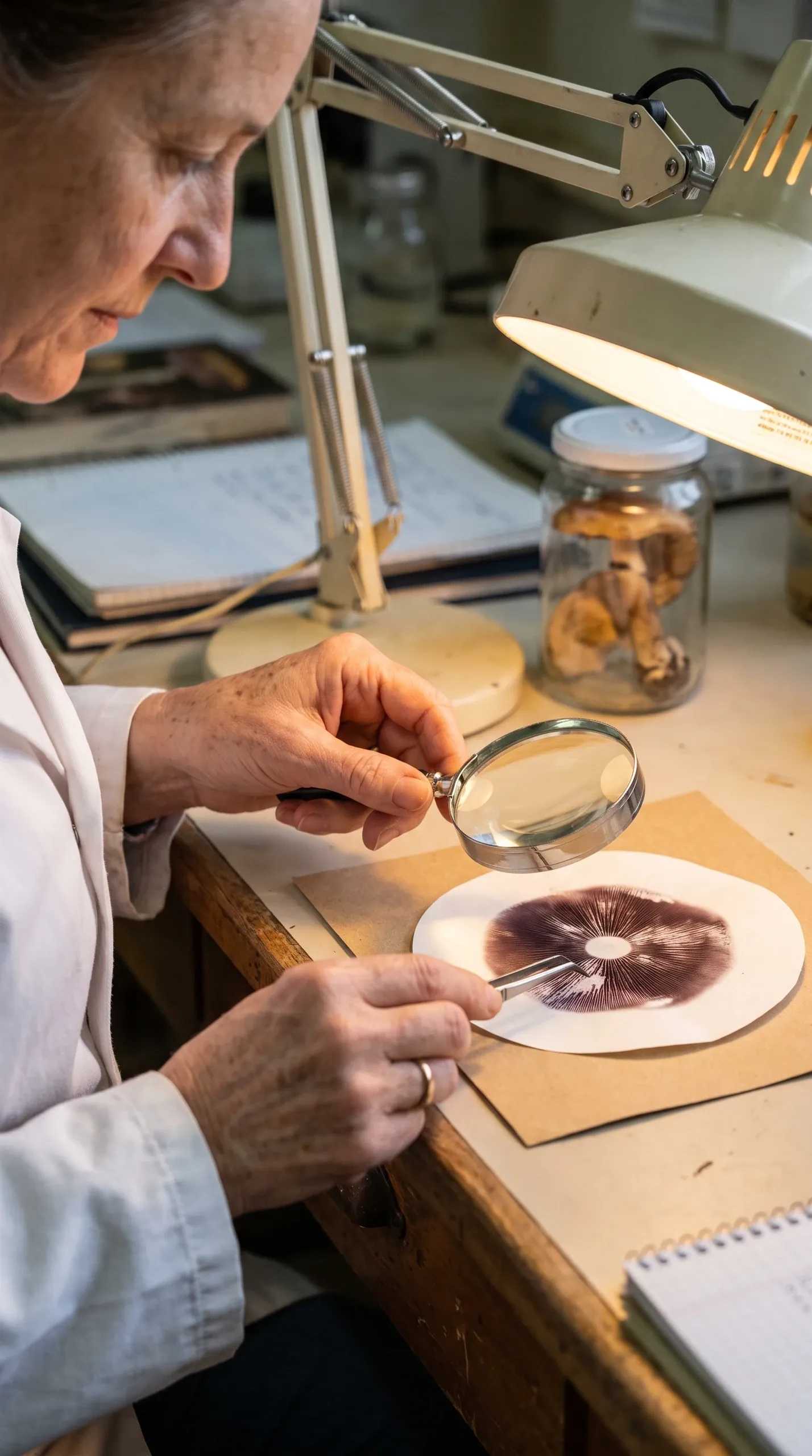
The safest mushrooms are the ones you do not pick. The second safest are the ones you pick and then do not eat. The third safest are the ones an expert identifies for you, and even then, you are accepting residual risk. There is no app, no book, no online community, and no amount of personal experience that eliminates the possibility of a fatal mistake. If you are not comfortable with that level of uncertainty, do not forage. If you are comfortable with it, verify everything twice, involve experts, and treat every identification as if your life depends on it, because it does.
Frequently asked questions
Can an expert mycologist still misidentify a deadly mushroom?
Yes. Formal training and decades of experience reduce the risk but do not eliminate it. Morphological variation within species, atypical specimens, lookalikes, and environmental factors that alter appearance all contribute to identification errors even among professionals. Case reports document trained mycologists poisoned by mushrooms they misidentified, often species they had correctly identified many times before. The difference between an expert and an amateur is that experts know how often they are uncertain, and they verify identifications with peers.
Why can’t mushroom identification apps be trusted?
Machine learning models powering identification apps are trained on image datasets that do not capture the full range of morphological variation in wild mushrooms. The apps cannot check for subsurface features like a volva, cannot assess texture or smell, and cannot perform chemical or spore tests. They output probability estimates based on visual similarity, which users misinterpret as certainty. Poison control centers have treated cases where people ate mushrooms based solely on app identifications. The disclaimers exist because the technology is not reliable enough for decisions that carry fatal consequences.
What should I do if I eat a wild mushroom and start feeling sick?
Seek emergency medical care immediately, even if symptoms seem mild. Bring a sample of the mushroom or detailed photographs. Tell medical staff exactly what you ate, when you ate it, how much, and how it was prepared. Do not wait to see if symptoms improve. Amatoxin poisoning from death caps and destroying angels causes delayed symptoms that appear six to twelve hours after ingestion, by which point liver damage may already be severe. Early intervention improves outcomes dramatically, but only if treatment begins within the first twelve hours. Do not let embarrassment, fear of legal trouble, or a wait-and-see approach delay treatment.
Do cooking or drying wild mushrooms reduce the risk of poisoning?
No. Amatoxins, the lethal compounds in death caps and destroying angels, are heat-stable and acid-stable. Boiling, frying, baking, or drying the mushroom does not degrade the toxin. Some other mushroom toxins are heat-sensitive, but you cannot know which toxins are present without first correctly identifying the species, at which point cooking is irrelevant. The belief that cooking makes an unknown mushroom safe has contributed to fatal poisonings. If you do not know what the mushroom is, cooking it does not help.
This article is educational and is not an identification guide. Never eat a wild mushroom unless a qualified local expert has verified it. In case of suspected poisoning, contact your local poison control centre or emergency services at once.